Nov. 26, 2026
Industry Trends
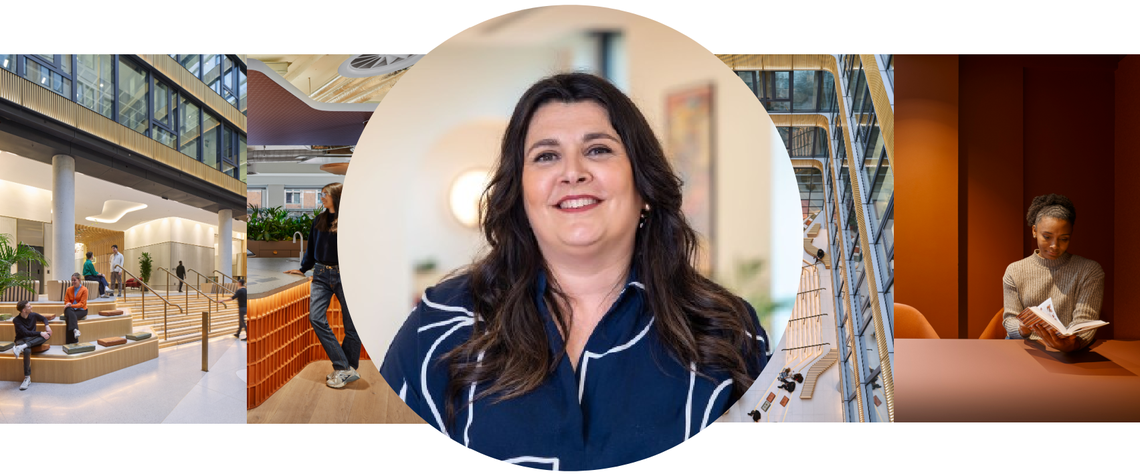
The collected thoughts of Kelly Stanton, Design Manager and Senior Associate with Gensler Birmingham, as the studio marks its 10th anniversary in the city.
For years, the workplace has been designed to win over the next generation. In this episode of Theories of Design, Gensler's Kelly Stanton asks what happens when the workforce stops being young and starts being long-lived, and why the answer may be more social than you'd expect.

Five Generations, One Floor
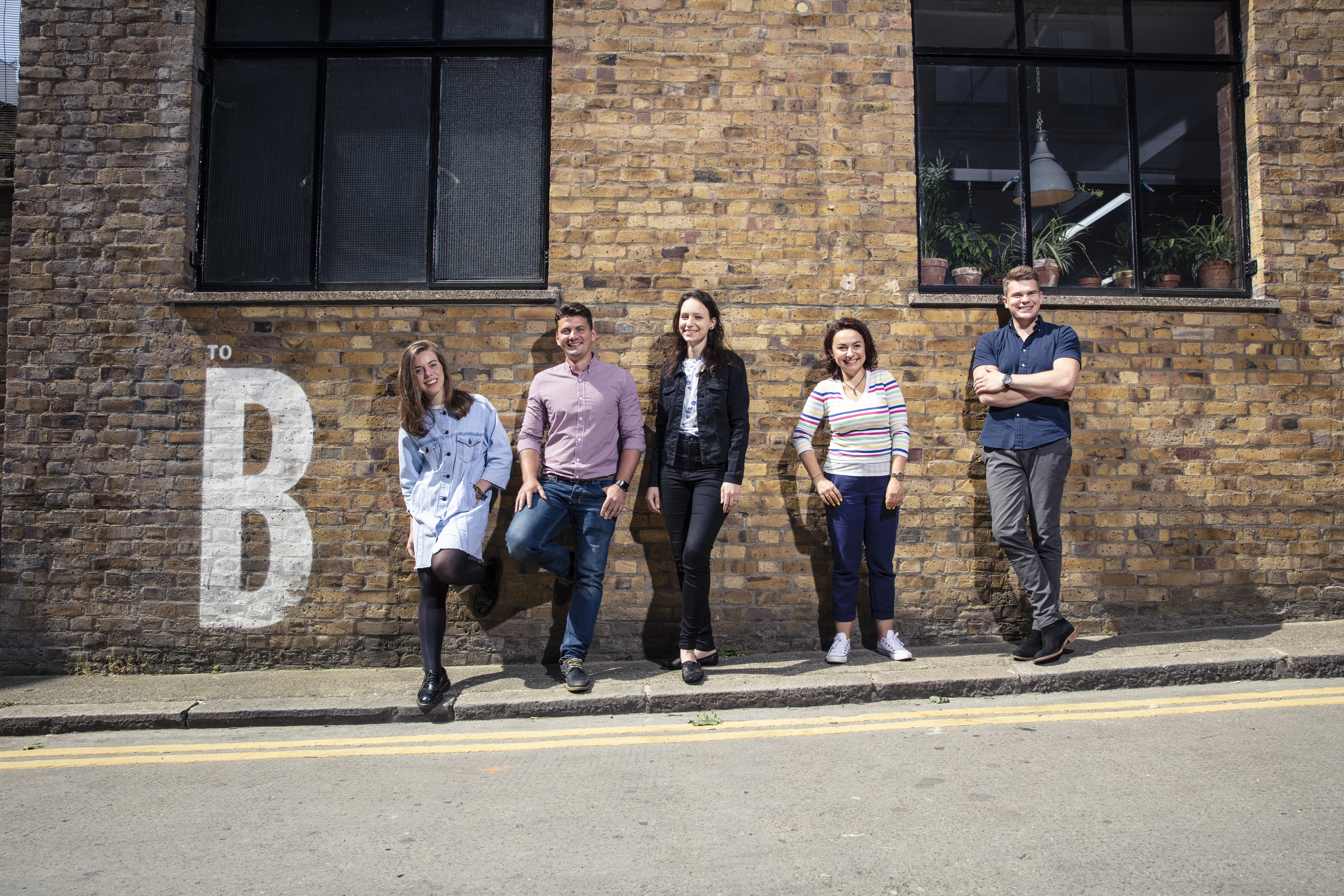
"For the first time, five generations are working alongside one another, bringing different experiences and expectations." Kelly points out that in the UK, people aged 50 and over now represent one third of the workforce, making them one of its fastest-growing segments.
Yet the design conversation hasn't caught up. "Throughout my career, the conversation has often focused on attracting next-generation talent, with high-quality environments used as a tool to recruit and retain young people," says Kelly. Career longevity, the ability to sustain a meaningful working life over a much longer stretch, is the shift that changes the brief.
Her way of making sense of it is to split the workforce into three groups: Wisdom (Late Career), Knowledge (Mid Career) and Youth (Early Career). The twist is that this is not a ladder. "Instead of a hierarchy, these groups form an interdependent system in which each learns from the others."
The Surprising Case for The Open Space
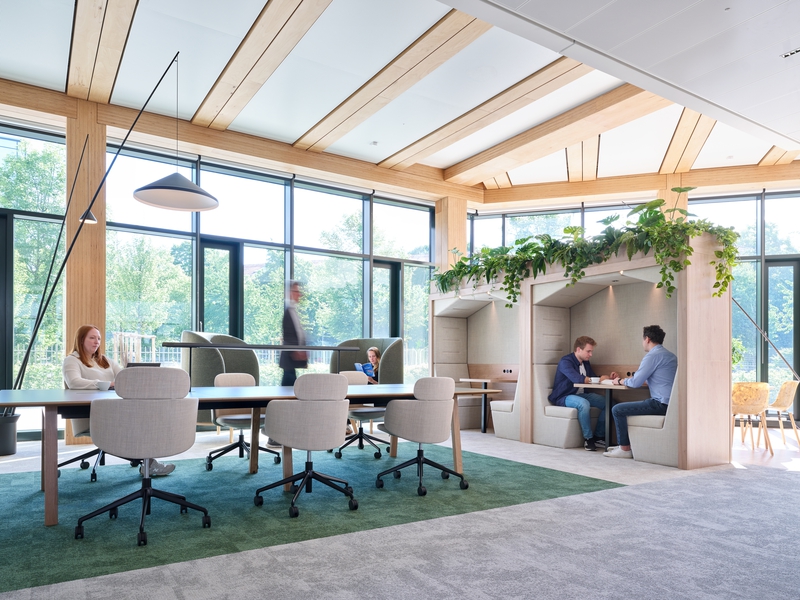
You might assume that experienced workers would trade the open floor for a door that closes. Gensler's research suggests otherwise. Kelly shares that longer career workers place greater value on open spaces than private environments, and that, according to Gensler's Global Workplace Survey, they spend about 45% of their typical week in the office, with more of that time given over to socialising and connecting than other workers.
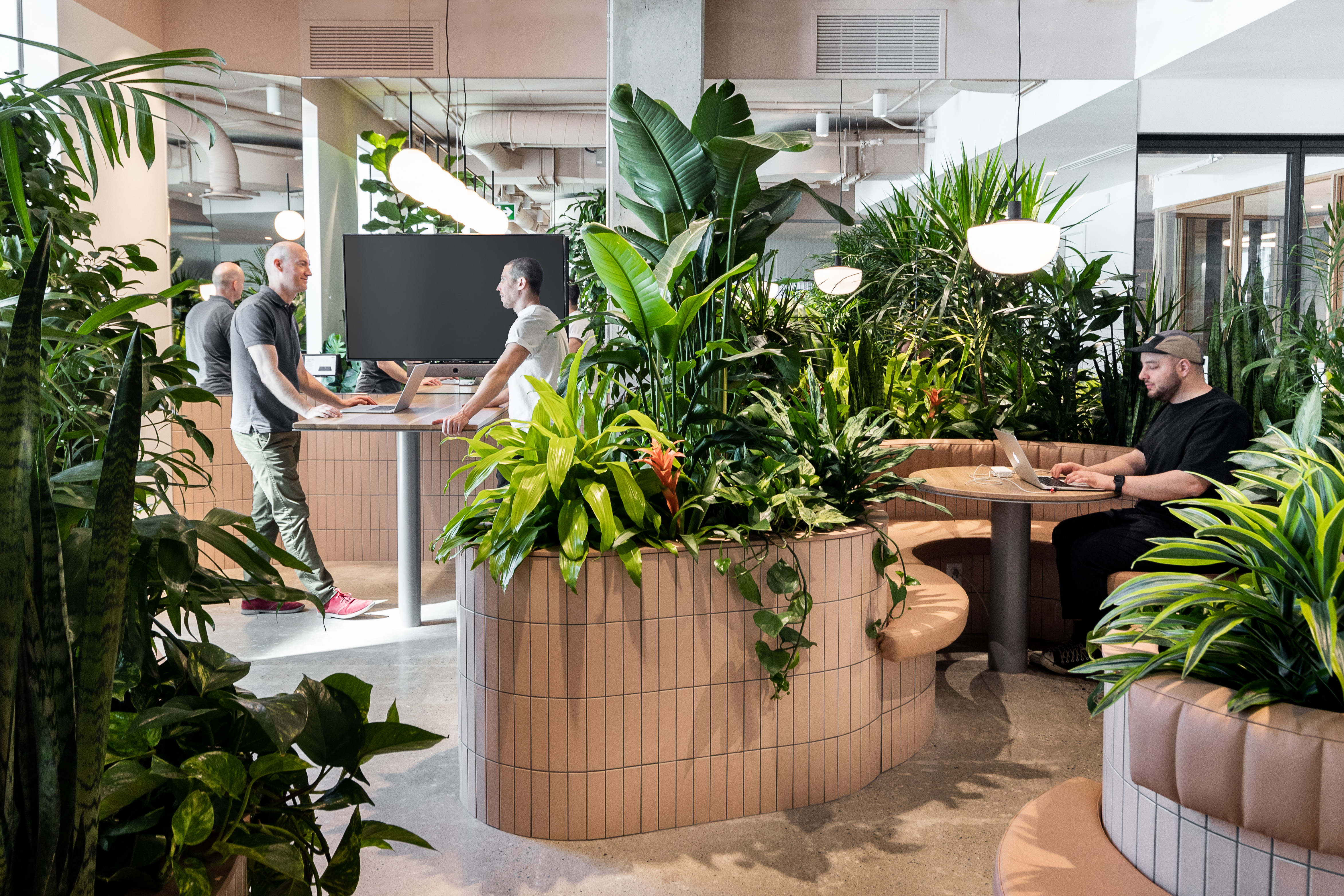
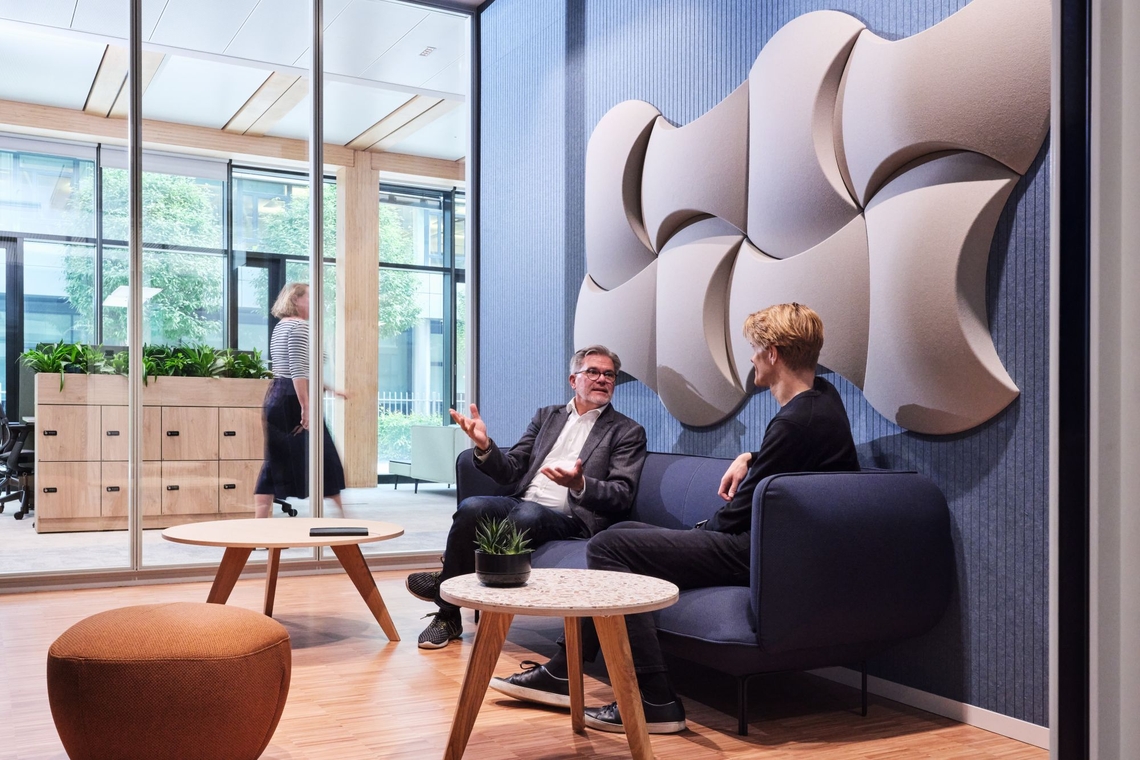
For Kelly, that points to a single idea: a core, 'heart' space where people naturally come together. Her reasoning is that "Some of the most valuable learning happens when we're not consciously trying to learn." Mentorship is rarely scheduled. "Open spaces build opportunities for relationships to form organically, whether that's a conversation at the coffee machine or an impromptu exchange of knowledge over lunch."
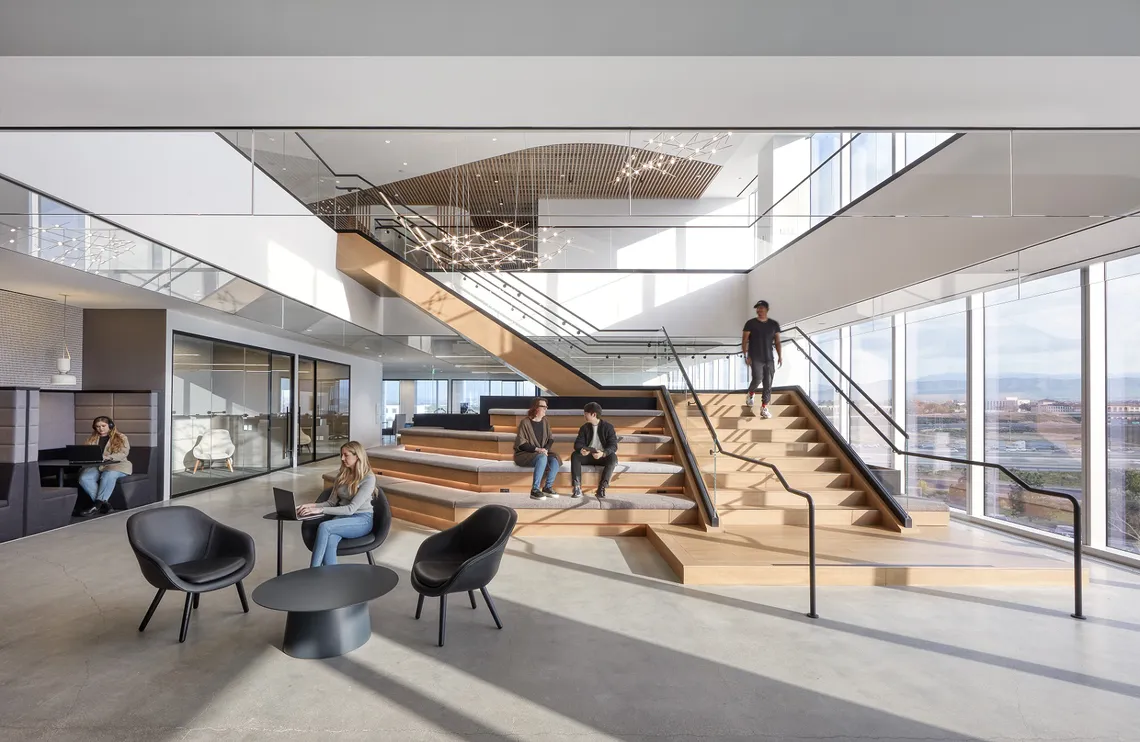
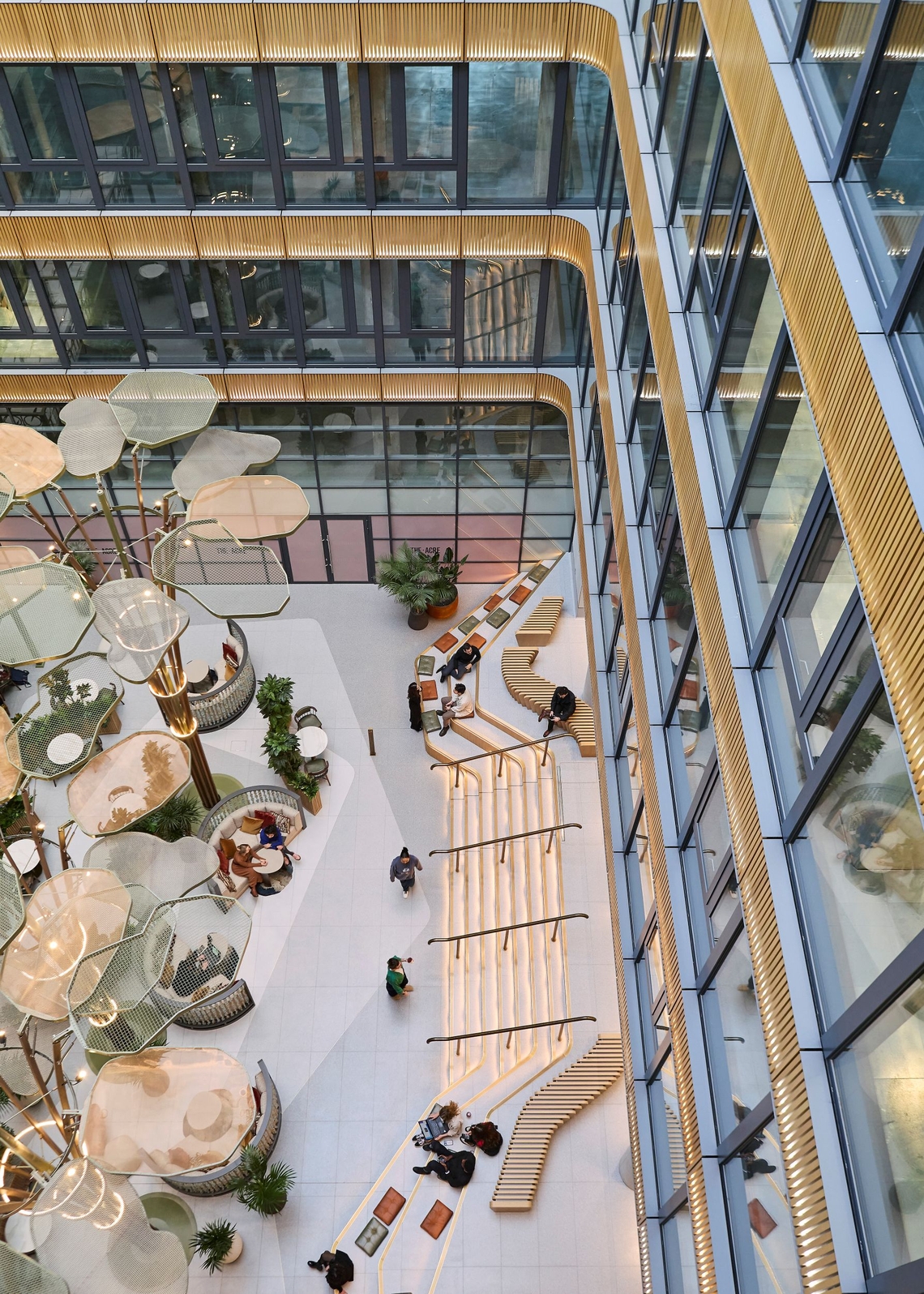
The retrofit of The Acre, a brutalist icon in Covent Garden, is an example of this. New entrances on Long Acre and Endell Street draw people through retail and activity until they arrive at the central Acre Café, with seating for individual work as well as tiered seating for larger events.
Don't Design for Generations in Isolation
The obvious response to a multigenerational workforce might be to design a zone for each generation. Kelly doesn't buy it. "I don't think it's necessarily about balancing the needs of one generation against another." Her alternative is to start with strategy and bring people from different career stages into the conversation early, so that "Instead of designing separate solutions for different age groups, it's about using those different perspectives to create an adaptable workplace across career stages."
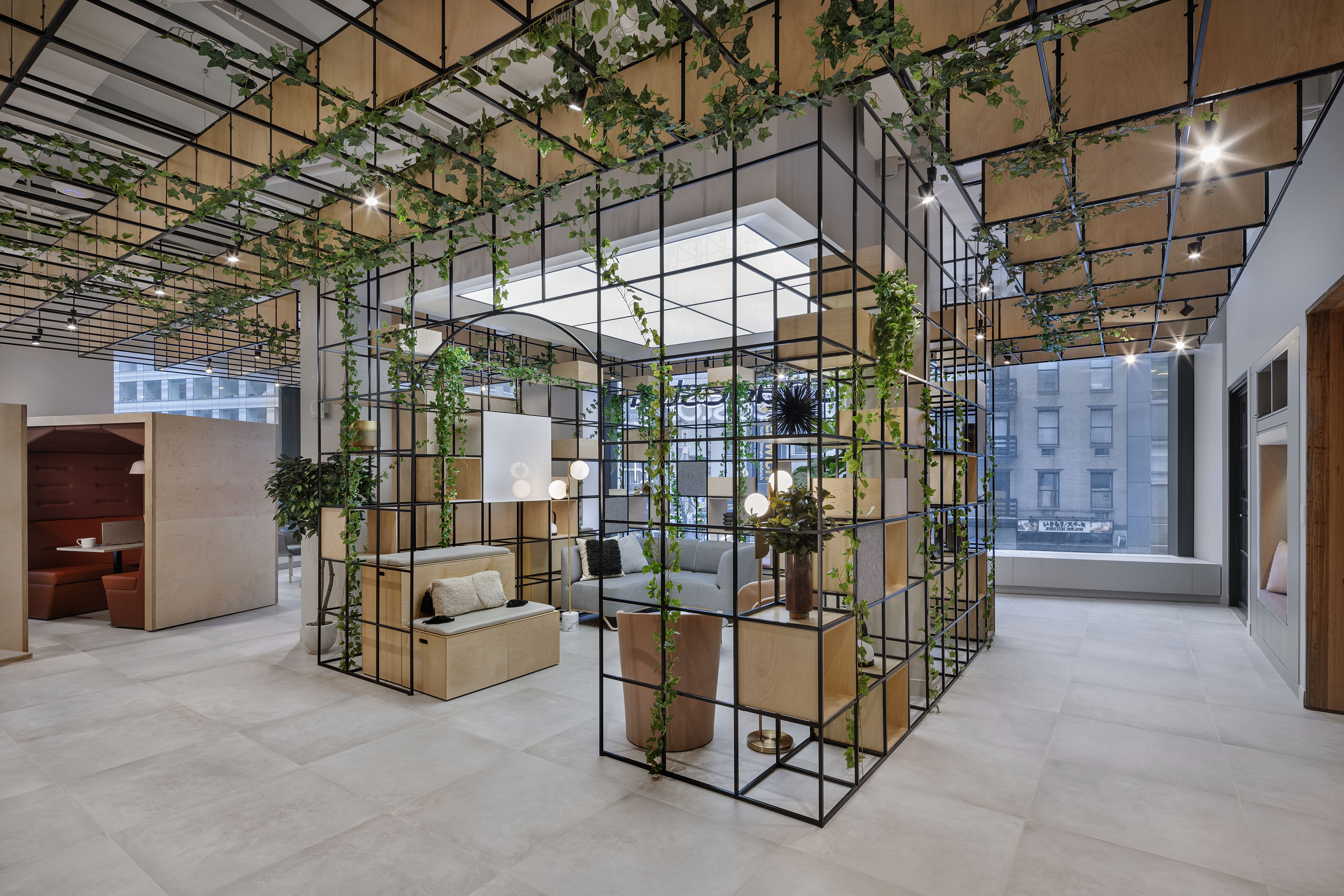
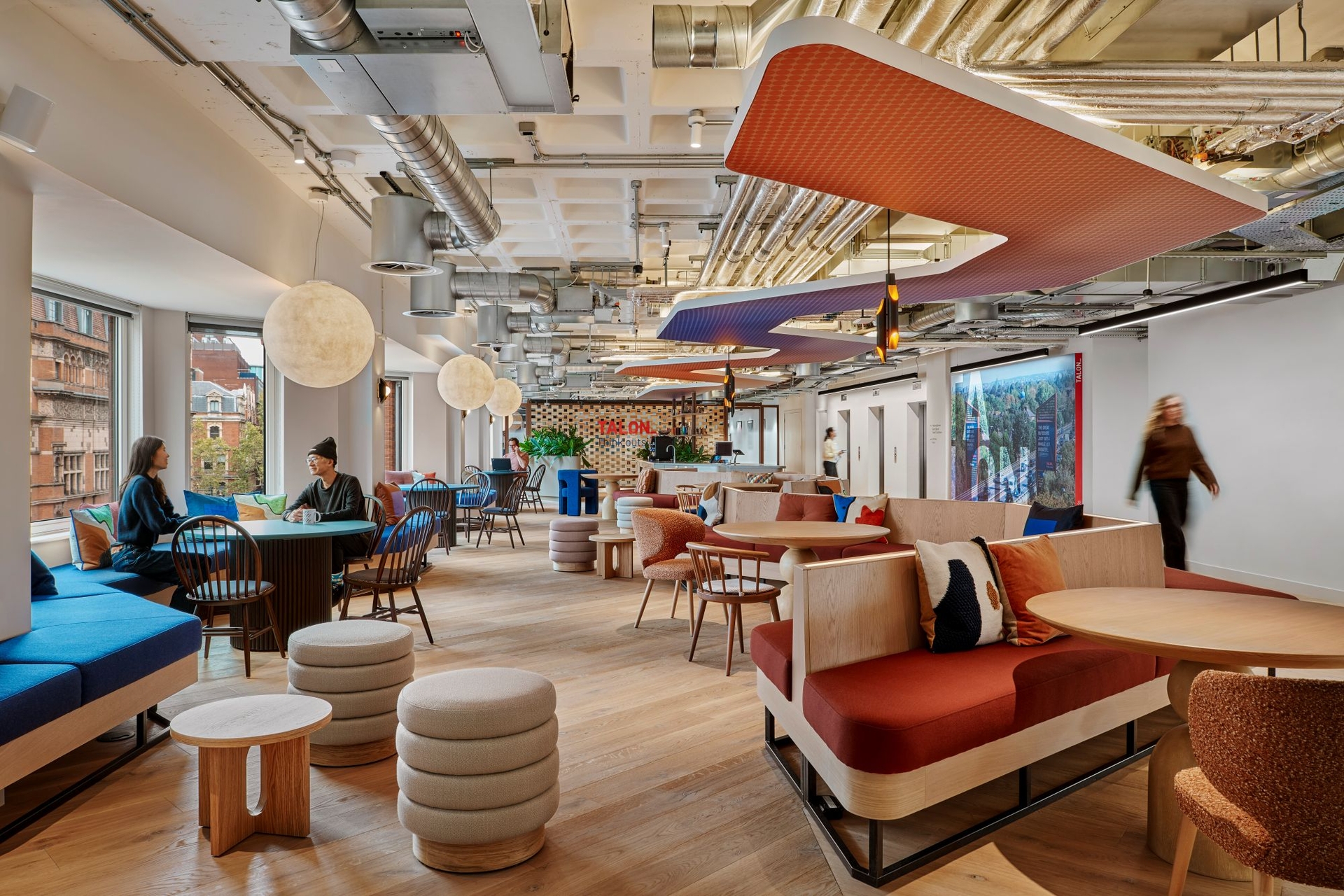
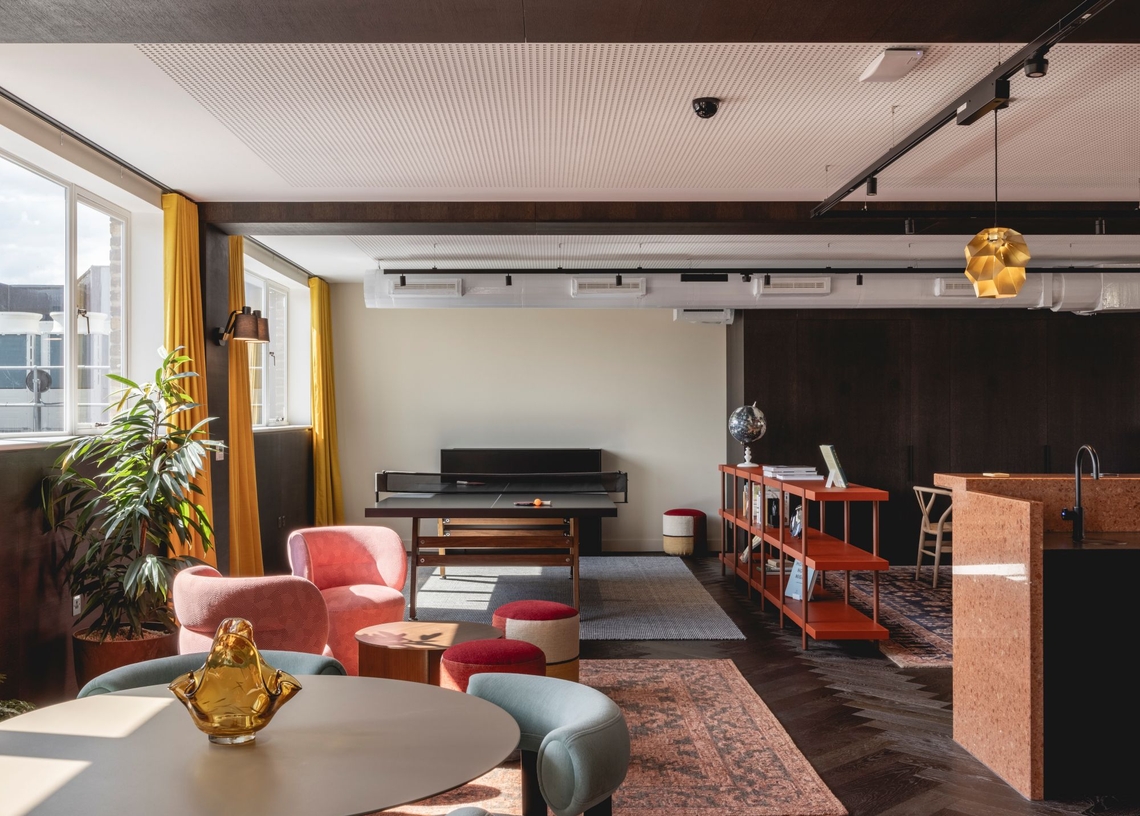
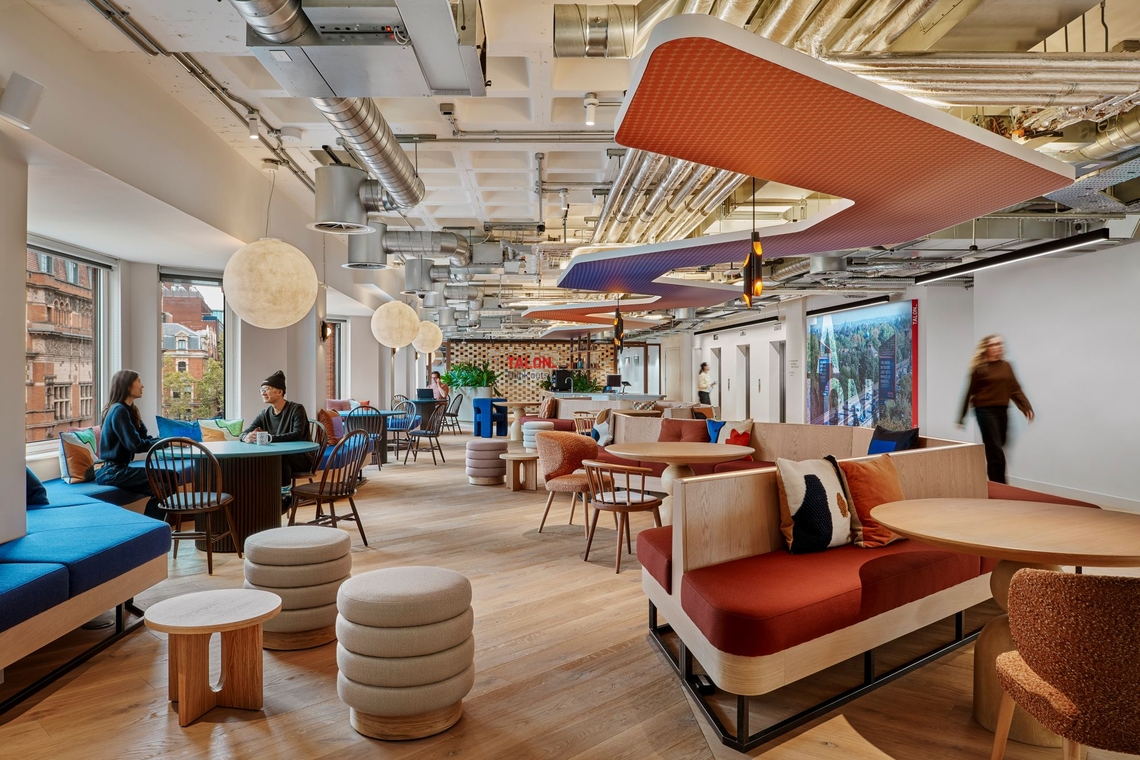
At Edelman's Francis House, that meant beginning with culture and the values of excellence, curiosity, courage and positive impact. The result spans five floors, with eight mezzanines, double-height ceilings, a spiral staircase and twelve different areas for introversion and extroversion, from a high-energy games room to settings for solo work. At Talon's new headquarters, quiet zones with darker palettes sit alongside open areas for social connection and teamwork.
The test of success is hard to measure specifically. "Overall, the best solutions don't feel like they've been designed for a particular age group. They simply create a high-performing environment that works well for everyone."
Technology Is Changing How We Connect
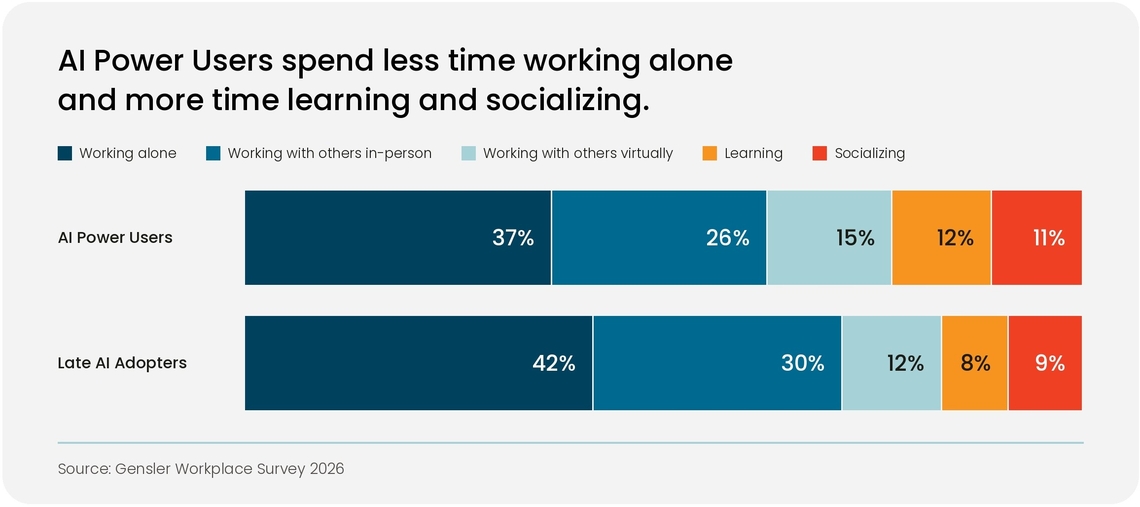
These principles of choice and adaptability become even more important as technology reshapes how people work across generations. Through her work with financial services clients, Kelly has seen that introducing new tools is not simply a technical exercise; it also changes how people collaborate, learn and connect. As she observes, "technology can increase the need for human connection rather than reduce it." As technology takes on more tasks, workplaces need to place greater emphasis on distinctly human strengths: sharing knowledge, building relationships and learning from colleagues at every career stage.
For Kelly, this means creating environments that offer choice and flexibility. Spaces for collaboration and informal knowledge-sharing should be visible and accessible, balanced with quieter settings where people can focus, step away and recharge. Particularly in high-pressure environments that can be noisy and overstimulating, she believes "individuals need places to step away and recharge." Both are essential to creating workplaces that support people through longer, more varied careers.
To Takeaway
Career longevity isn't a niche concern for the over-50s. It is the same brief as every other workplace one: choice, connection and maximizing constructive productivity, built in from the start and not bolted on later. If Kelly is right, the best workplaces for a long career will simply be the best workplaces.
Share this article