Refurbish or Relocate? Making a Workplace Refresh Count
What the latest workplace data tells occupiers who are staying put, and how to make a refresh feel like a fresh start.

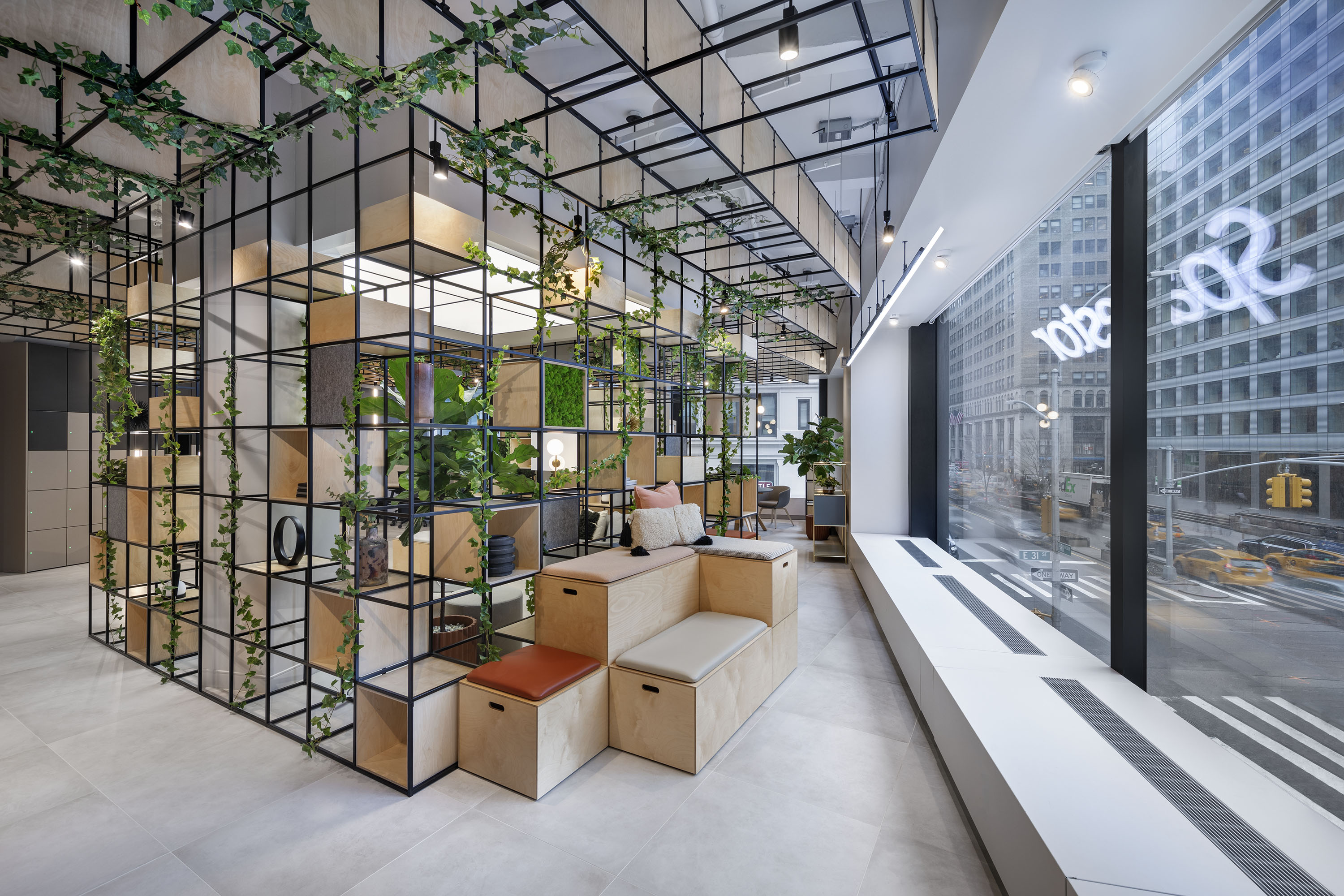

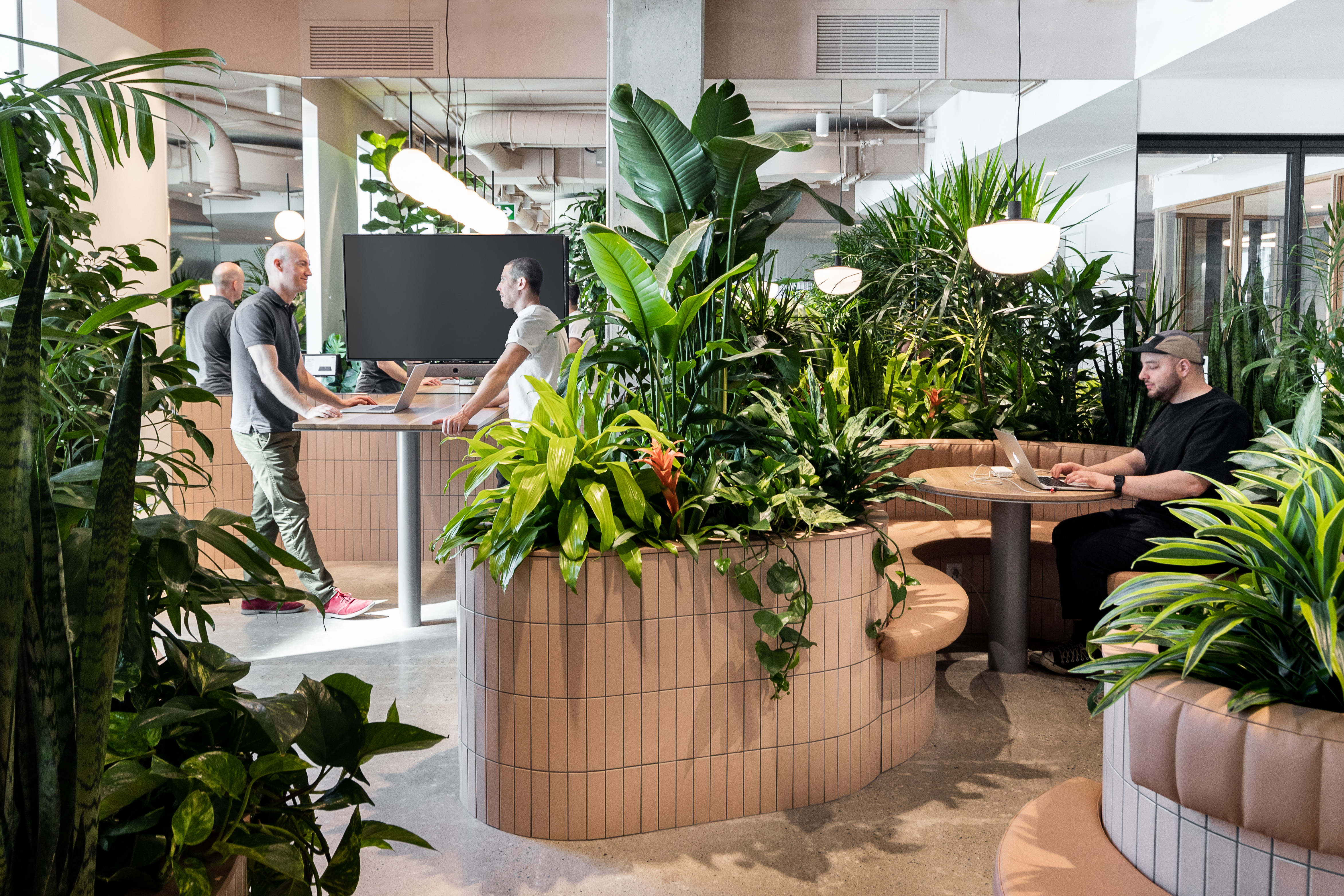
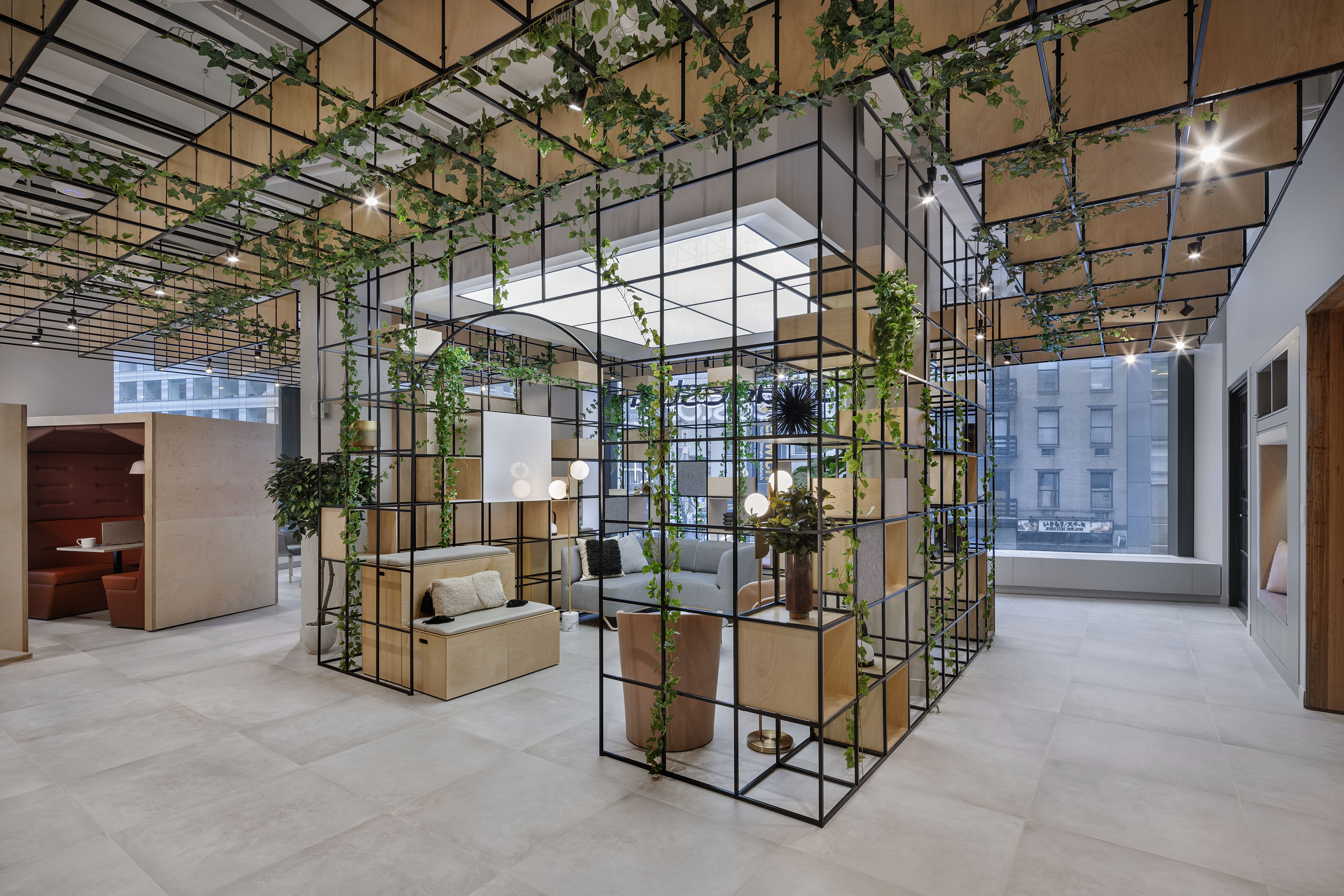

For many organizations, the next workplace project won't be a move. New office supply is tight, construction has slowed sharply and rents are rising, so the more common brief is a workplace refurbishment: same address, better experience.
The latest data makes that brief harder than it sounds, and raises a practical question for designers, workplace strategists and occupiers alike: how do you get the impact of a relocation without the relocation? Here is what the numbers say, and what they suggest for design.
1. Why are more occupiers refurbishing instead of relocating?
Because the new space isn't there. CBRE's Q3 2026 US Office Market report shows leasing on pace to beat the 2022 record, overall vacancy down for a fifth straight quarter to 18.2%, and construction completions down 76% year on year, with asking rents up more than 3%.
When prime space is scarce and getting more expensive, staying put and reinvesting becomes the default rather than the fallback. The conversation shifts from "where do we go next?" to "how do we make this floor work harder, for longer?" That is a different design brief, and it deserves the same ambition as a move.
2. The relocation gap is real
Leesman's Big Questions report, drawn from more than 1.6 million employee responses, compared 105 workplace projects. Relocations improved Leesman's experience score by an average of 10.9 points; refurbishments by just 3.5.
Part of the explanation is simple. A move forces a fresh look at everything: how people work, where they gather and where they focus. A refurbishment can do the same, but too often the scope stops at finishes while the layout logic stays exactly as it was. To get relocation-level results, a refurbishment needs relocation-level thinking.

3. One in four workplace projects made things worse
Perhaps the most sobering finding is that 25 of Leesman's 105 projects saw experience scores fall, with results ranging from a 32.7-point gain to an 18.9-point drop.
Investment alone doesn't guarantee improvement. Projects that land well tend to begin with how people actually use the space, rather than a furniture schedule or a fixed headcount ratio, and they keep measuring after opening day. Understanding the starting point, and checking the result, is what separates a refresh that works from one that simply looks new.
4. People are coming back for each other
CBRE reports that 89% of US employers now require at least three office days a week, up from 78% a year earlier. As Stefan Weiss of CBRE put it, "The main benefit to being in the office is that other people are in the office."
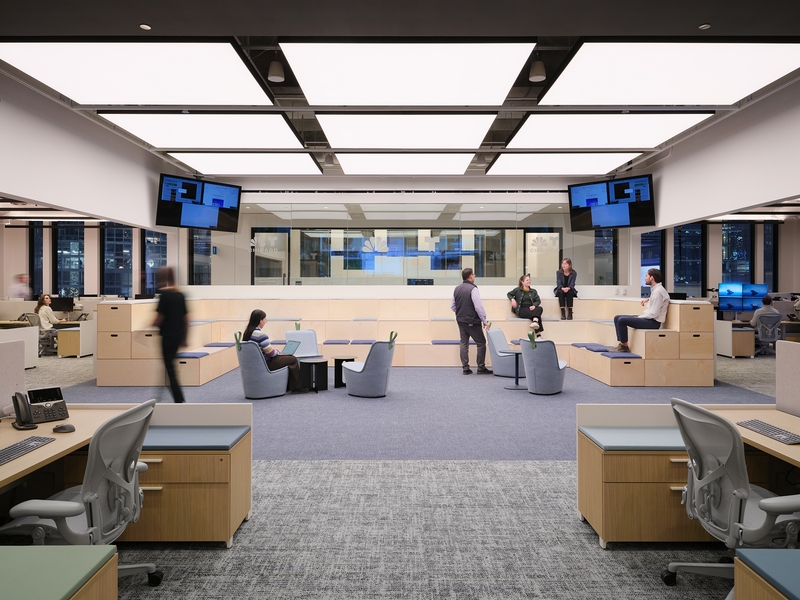
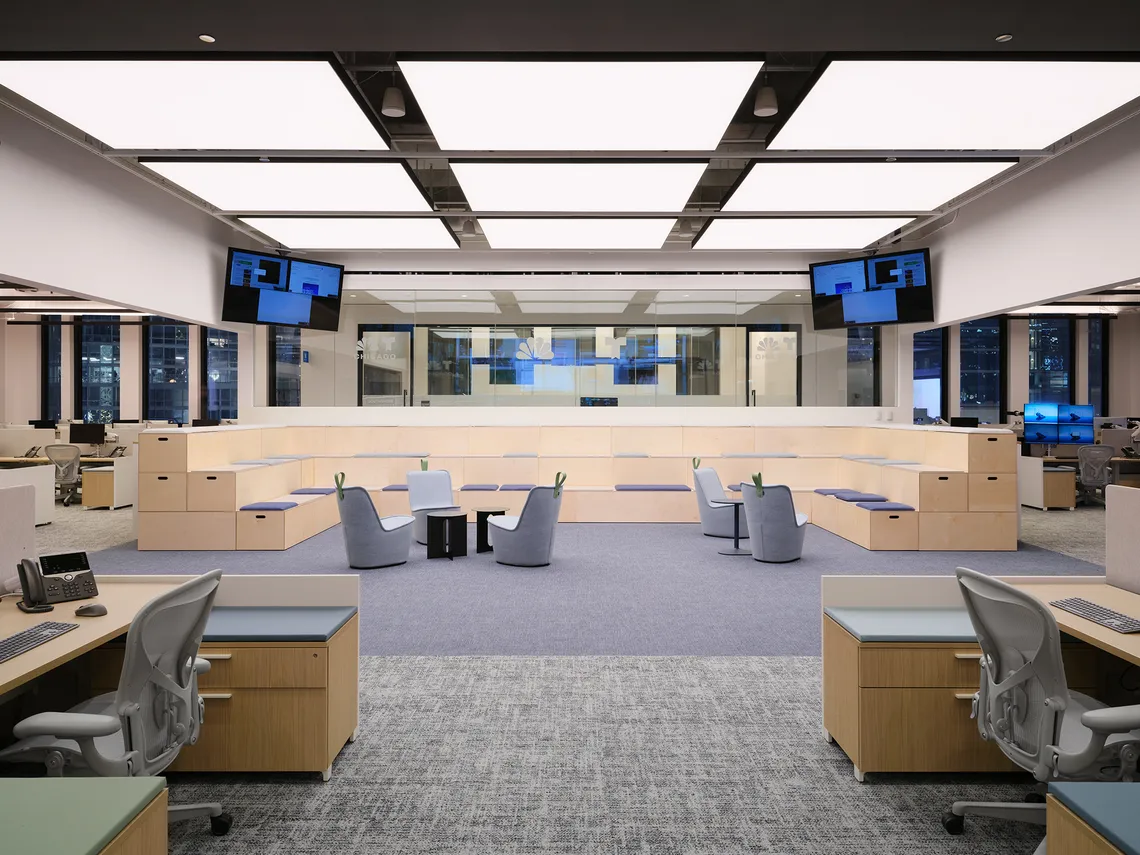
That puts the settings in between at the center of any refurbishment brief: social hubs, collaboration points and destinations that work for a 9am briefing and a 5pm team gathering alike. At NBCUniversal in Chicago, for example, a three-tier U-shaped installation of Bleachers forms a central collaboration hub that flexes from briefings and town halls to social events. Plan the gathering points first, and the rest of the floor tends to follow.
5. How should workplace acoustics shape a refurbishment?
Acoustics should be designed in from day one, not treated as a finishing touch. Leesman found that only 4% of 2,200 workplaces reached high noise satisfaction, and those that did scored far higher on overall experience.
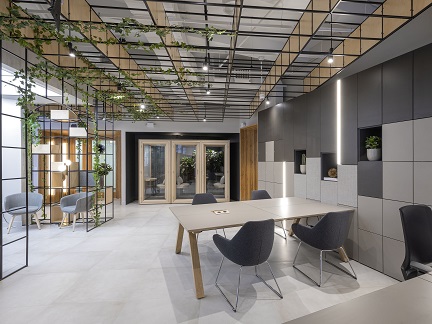
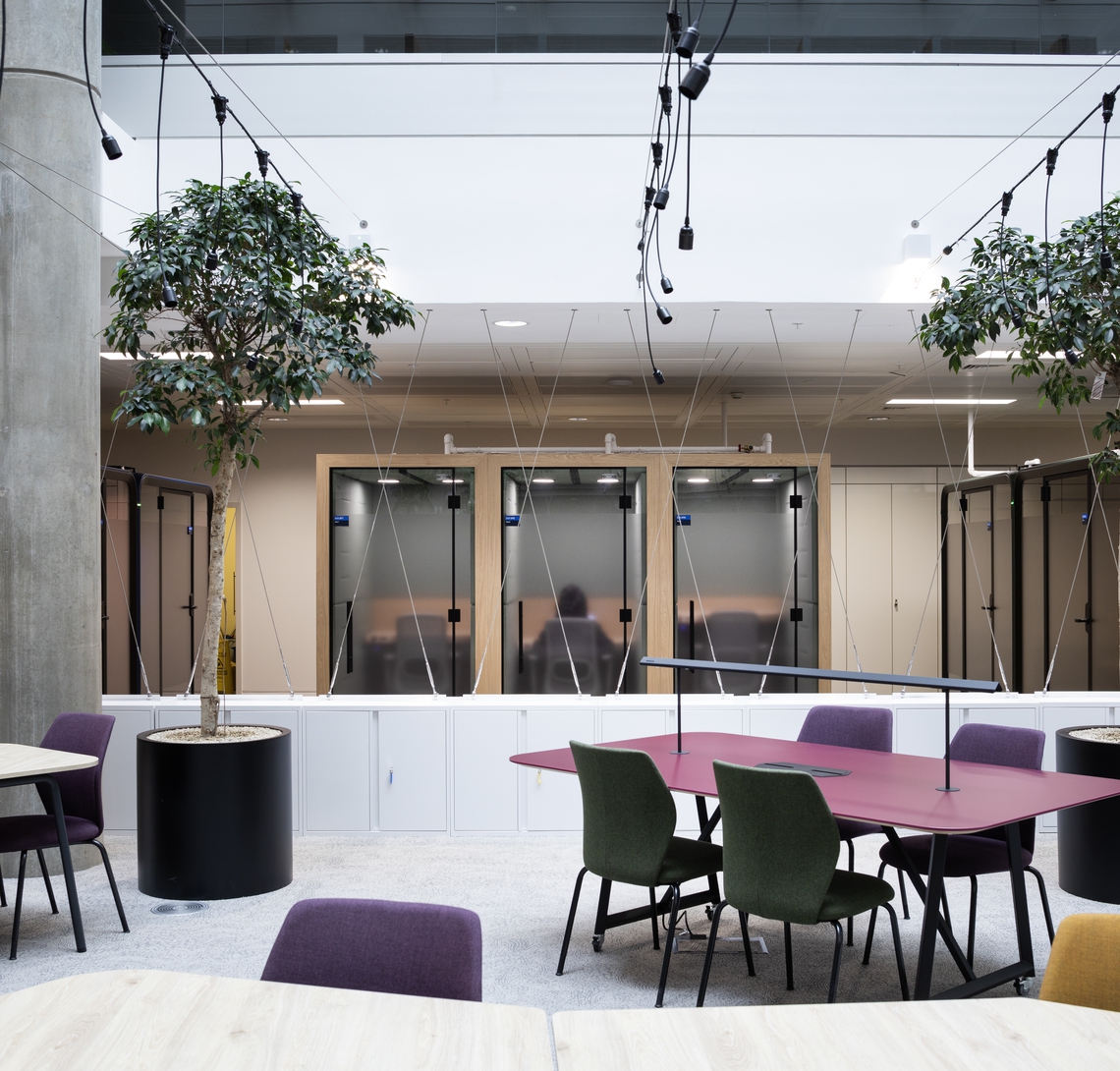
The biggest differences come from enclosed space. Quiet rooms showed a 50-point satisfaction gap between the strongest and weakest workplaces, and phone booths 48 points, compared with just 12 for headsets. A refurbishment is the ideal moment to place quiet rooms and booths close to where people work. At Imperial College London, a pod hub of private booths sits within the open plan to support calls and focused work while helping keep noise down across the floor. Acoustic space is infrastructure, not an accessory.
6. Design for every brain, not the average one
About one in five employees in Leesman's data reported a disability, long-term health condition, mental health difficulty or neurodivergent profile. Only 50% of them said their workplace helped them work productively, against 67% of colleagues; satisfaction with noise was 19% versus 32%, and with lighting 43% versus 59%.
Inclusion is moving from policy into the floorplate, through a range of sensory environments, places to retreat and genuine choice in where and how people work. Our recent webinar panel returned to the same theme, and our Neurodiversity whitepaper explores it in more depth. An inclusive refurbishment is, quite simply, a better refurbishment.
7. Keep what works, and make it flexible
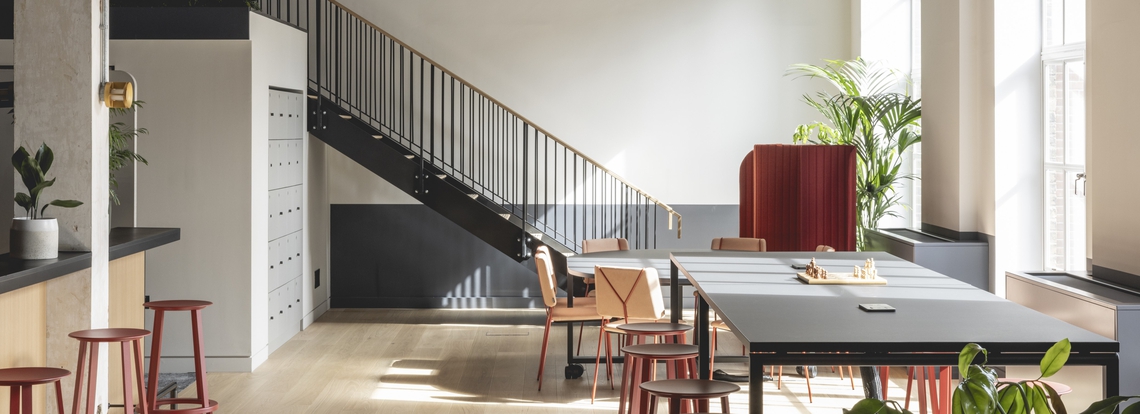
A refurbishment doesn't have to mean starting from scratch. Modular, relocatable furniture lets an existing floor be re-landscaped as needs change, and lets good pieces stay in service. At Imperial College London, an existing HotLocker installation was retained in the building, reducing material use.
Modular storage walls, zoning and freestanding booths can be reconfigured or moved to another floor rather than replaced, which keeps the next refresh lighter too. The most sustainable workplace change is the one you can make again.
Final Thought
With new space scarce and attendance rising, more organizations will be asking their existing floors to do more. The latest data is clear that a refurbishment can fall short of a move, but only when it is treated as a cosmetic exercise. Start from how people work, plan the gathering and quiet spaces first, design for every brain, and choose pieces that can adapt as the brief evolves. To discuss any of these points in more detail, or explore how Spacestor could support your next refurbishment, reach out below.
FAQs
Is it better to refurbish or relocate an office?
It depends on the space available and what you need to change. Leesman's data shows relocations deliver bigger experience gains on average, but a refurbishment that rethinks layout, acoustics and settings, rather than just finishes, can close much of that gap at a lower cost and disruption.
How can a refurbishment improve workplace acoustics?
Plan enclosed space close to where people work. Leesman found quiet rooms and phone booths make far more difference to noise satisfaction than headsets. Freestanding booths and pods can be added to an existing floor without major construction.
How do you make an office refurbishment more sustainable?
Retain and reuse what works, specify modular and relocatable furniture that can be reconfigured later, and choose products with recognized environmental credentials so the next change needs fewer new materials.