9 août 2026
Tendances du secteur
Ask any employee what disrupts their concentration most during the working day, and the answers tend to cluster around three familiar culprits: noise, a lack of privacy, and poor lighting. Each has been extensively studied on its own, and each carries a measurable cost to focus, wellbeing, and performance. The more useful question for workplace leaders isn't whether these factors matter, it's which one is doing the most damage, and what that means for how offices should be designed.

The Cost of Noise
Noise is consistently the most cited source of dissatisfaction in open-plan offices. An analysis of more than 100 studies by the International Review of Industrial and Organizational Psychology found that noise is the greatest issue employees raise when questioned about open-plan environments, and a widely cited 2008 survey led by Annu Haapakangas found that half of open-plan office workers were dissatisfied with noise levels, compared to just 20% of those working in private rooms.
The impact isn't just a matter of comfort. The same research found that employees lose an average of 21.5 minutes a day to conversational distractions alone, with speech identified as the single greatest cause of reduced productivity in open offices. Acoustics expert Julian Treasure has estimated that workers in open offices can be up to 66% less productive than when working somewhere private, a striking figure that underlines just how disruptive ambient conversation can be to sustained focus.
The Cost of Lost Privacy
Closely related to noise, but distinct from it, is the issue of privacy, both visual and acoustic. Employees who feel their conversations, calls, or work can be overheard or observed report measurably higher stress and dissatisfaction, even when overall noise levels are relatively low.
One recent acoustic study surveying 349 employees across 28 offices found that a lack of privacy contributed 25% more to overall acoustic dissatisfaction than noise disturbance itself. In other words, it isn't only how loud a space is that erodes focus, it's whether employees feel exposed within it. This distinction matters for design: reducing decibel levels alone won't solve the problem if employees still feel they have nowhere private to think, talk, or work without being seen or heard.
The Cost of Poor Lighting
Lighting is often the most overlooked of the three, yet the research linking it to performance and wellbeing is substantial. Cornell University research found that employees working in naturally lit environments reported a 56% reduction in drowsiness and a 63% drop in headaches compared to those without adequate access to daylight.
The effects extend beyond the workday itself. A Northwestern University study found that employees working in offices with windows slept an average of 46 minutes more per night than colleagues working in windowless spaces, a meaningful difference given the well-established links between sleep quality and next-day concentration. Separately, research from Human Spaces found that proximity to natural light and greenery was associated with a 15% increase in perceived wellbeing and creativity, alongside a 6% lift in self-reported productivity.
Which Factor Wins, and Why It's the Wrong Question
Taken individually, noise appears to carry the heaviest immediate cost to output, privacy shapes how safe and comfortable employees feel using a space at all, and lighting exerts a slower, cumulative influence on energy, mood, and sleep. But treating these as competing problems misses the point: in most offices, they are not separate issues, they are compounding ones. An open-plan desk with high foot traffic, no acoustic separation, and poor access to daylight can suffer from all three simultaneously, and their effects don't simply add up, they multiply.
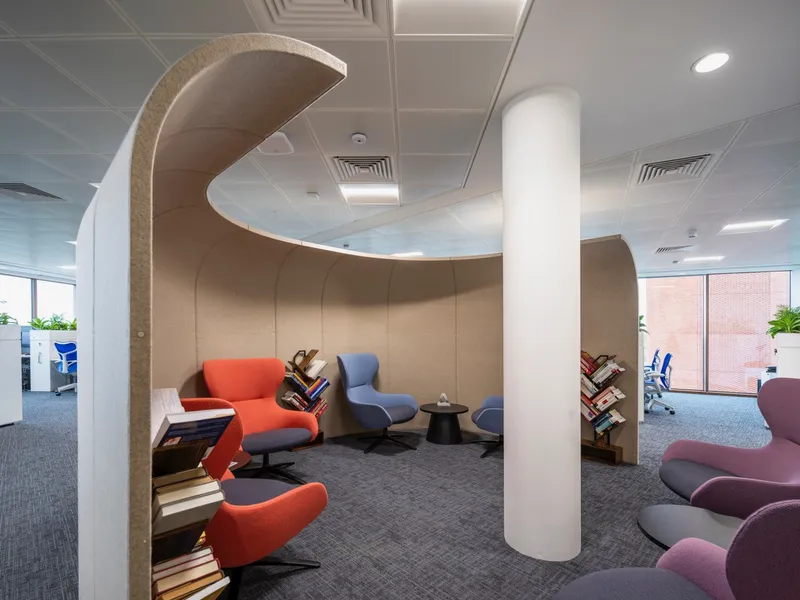
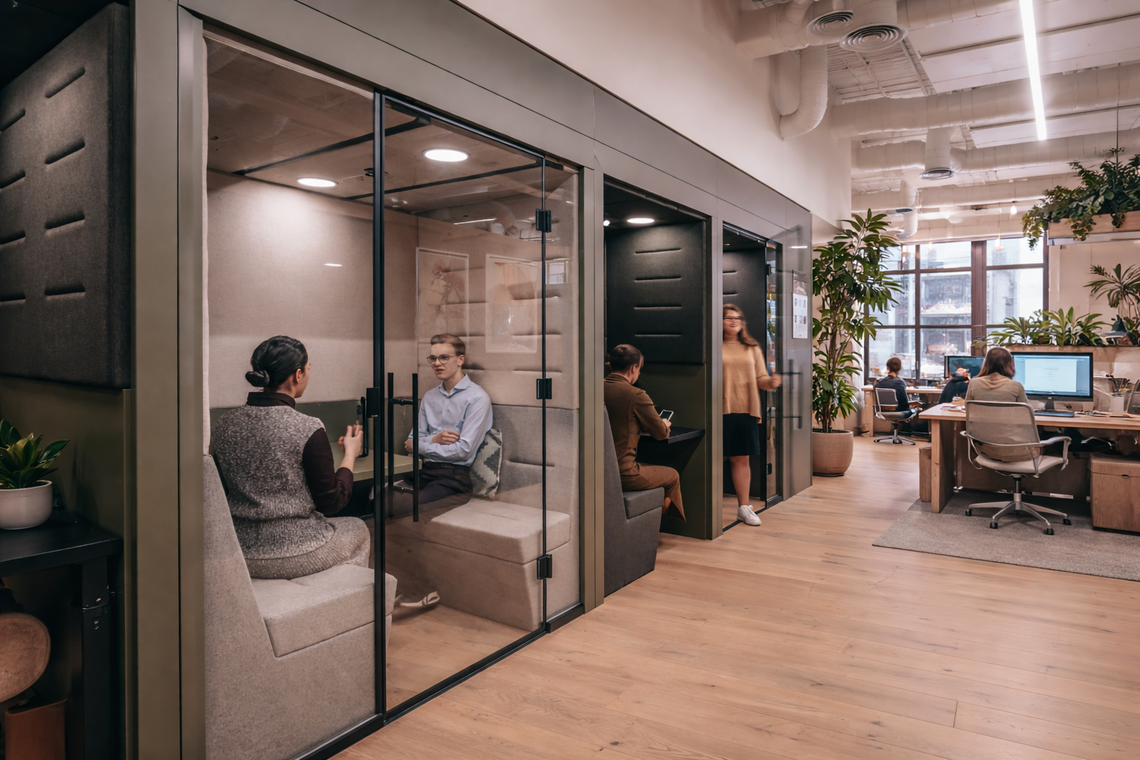
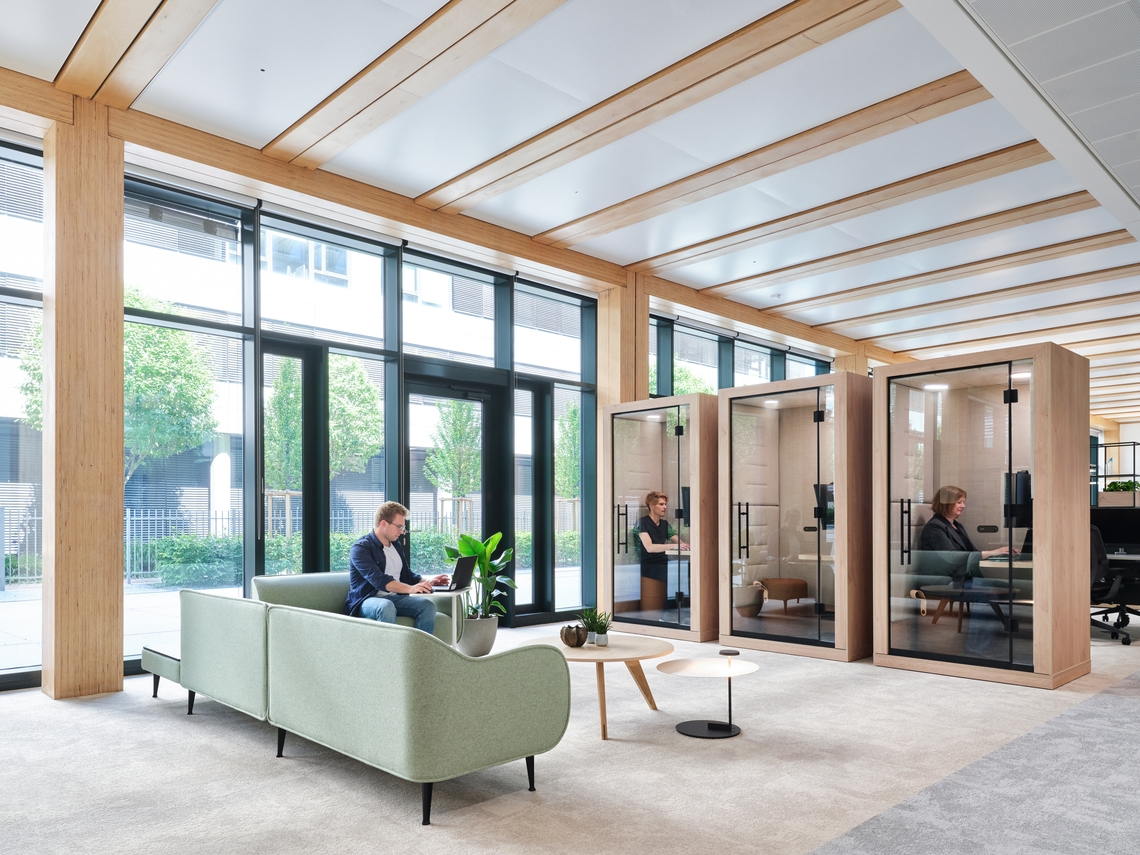
This is why the most effective response isn't to rank the problems, but to design for all three at once. Enclosed, acoustically-treated spaces, such as pods and booths, address noise and privacy together, while thoughtful zoning that keeps quiet areas away from circulation routes and prioritizes access to natural light addresses the third. Employees consistently report higher satisfaction and productivity not when one factor is perfected, but when they have a genuine choice of environments suited to the task in front of them.
Focus isn't lost to a single design flaw. It's eroded gradually, by a workplace that hasn't been built with these factors in mind. The organizations getting this right aren't necessarily spending more, they're simply asking a more precise question: not "is our office loud," but "does every part of our space support the kind of work that happens there."
Partager cet article